
Understanding Pressure Measurement: Absolute vs. Gauge vs. Vacuum Demystifying Industrial Pressure Terminology for Engineers and Technicians
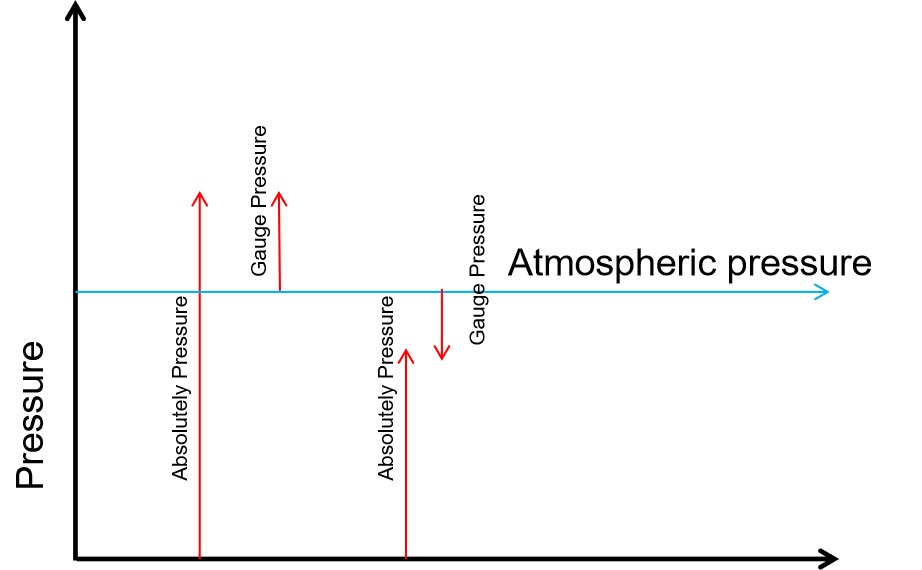
(Recommended infographic: Vertical bar scale with atmospheric pressure at center, absolute pressure extending upward from perfect vacuum, gauge pressure above/below atmospheric line, and vacuum pressure highlighted in red below atmospheric line)
Pressure measurement forms the backbone of industrial processes from HVAC systems to aerospace engineering. Yet confusing terminology like “absolute pressure” and “vacuum pressure” continues to trip up even experienced professionals. Let’s break down these critical concepts with real-world context.
1️⃣ The Two Reference Points Defining All Pressure
All pressure measurements require a reference baseline:
- Absolute Pressure (Pabs) Uses perfect vacuum (0 pressure) as zero point Example: Weather reports use absolute pressure (29.92 inHg = standard atmospheric pressure)
- Gauge Pressure (Pgauge) Uses local atmospheric pressure (~14.7 psi at sea level) as zero point Example: Tire pressure gauges show 32 psi (meaning 32 psi above ambient air pressure)
This fundamental distinction explains why aircraft altimeters require absolute pressure measurements while hydraulic systems primarily use gauge readings.
2️⃣ When Positive Gauge Pressure Rules
Key Principle: Pgauge = Pabs – Patm
Most industrial instruments (87% according to ASME survey) measure gauge pressure because:
- Directly shows overpressure risk
- Simplifies maintenance checks (e.g., 100 psi pump pressure)
- Eliminates atmospheric variation impacts
Case Study: Oil refineries use gauge pressure sensors to monitor distillation columns. When Pgauge exceeds 50 psi, safety valves automatically activate – a system that prevented 23 major incidents in 2022 alone (API Safety Report).
3️⃣ Navigating the Negative: Vacuum Pressure Explained
When Pabs < Patm:
- Gauge pressure turns negative
- Vacuum pressure = Patm – Pabs
Critical Applications:
- Pharmaceutical freeze-drying: Requires 0.01-0.03 bar vacuum
- Semiconductor manufacturing: Operates at 10-6 to 10-9 Torr
- Medical suction devices: Maintain -75 to -150 mmHg
Expert Insight: “Vacuum systems demand absolute pressure measurement. A 1% error at 0.001 bar can ruin a batch of microchips.”
- Dr. Emily Zhang, Vacuum Technology Society
4️⃣ Conversion Essentials (With Formula Cheat Sheet)
Quick Reference Table
| Measurement Type | Formula | Typical Use Case |
|---|---|---|
| Absolute Pressure | Pabs = Pgauge + Patm | Altitude calculations |
| Gauge Pressure | Pgauge = Pabs – Patm | Pipeline monitoring |
| Vacuum Pressure | Pvac = Patm – Pabs | Vacuum furnace control |
Pro Tip: Always verify measurement context – using gauge pressure readings for vacuum processes can cause dangerous miscalculations.
5️⃣ Selecting the Right Pressure Sensor
Follow this decision flowchart:
- Operating Range
- Above atmosphere → Gauge sensor
- Below 1 atm → Absolute/vacuum sensor
- Environmental Factors
- Altitude changes > 300m? Use absolute reference
- Industry Standards
- ASME B40.100 mandates gauge for boilers
- SEMI F72-02 requires absolute in cleanrooms

 English
 Spanish (Peru)
 French
 German
 Russian
 Arabic
 Japanese
 Spanish (Spain)
 Portuguese
 Chinese